> For the complete documentation index, see [llms.txt](https://library.zoom.com/llms.txt). Markdown versions of documentation pages are available by appending `.md` to page URLs; this page is available as [Markdown](https://library.zoom.com/admin-corner/account-and-endpoint-management/delegated-administration-field-guide.md).
# Delegated Administration Field Guide
This document provides instructions for granting external users, such as your Zoom sales team members, delegated access to your company’s Zoom account.
## Overview
This document provides instructions for granting external users, such as your Zoom sales team members, delegated access to your company’s Zoom account.
Depending on the role settings and scopes granted as a part of this setup process, external or third-party users will be able to help view or edit your account’s settings and information at your discretion. Many Zoom customers find this is particularly helpful in the early stages of an account setup, as delegate users can verify settings and access data or information used for troubleshooting. To perform this setup process, complete the following steps.
{% hint style="info" %}
**Note**
Only **Licensed** users can manage external accounts.
{% endhint %}
## **Before you Begin: Confirm Permissions**
Before configuring delegated administration access, account admins should verify that they have the appropriate role-based permissions for the products they intend to delegate. For example, admins may not have administrator-level access to Zoom Contact Center or Zoom Events unless the **account owner** has explicitly assigned the necessary permissions to their role.
Refer to Zoom’s support center for more information on [changing role-based access](https://support.zoom.com/hc/en/article?id=zm_kb\&sysparm_article=KB0064983).
## Delegated Administration Setup
### Step 1: Configure Delegated Administration Role Settings
This step describes how to create and confirm the Delegate Admin’s role-based settings and access for your account. Perform the following steps:
1. As an account owner or authorized admin with sufficient role-based permissions, sign into the [Zoom web portal](https://zoom.us/signin#/login).
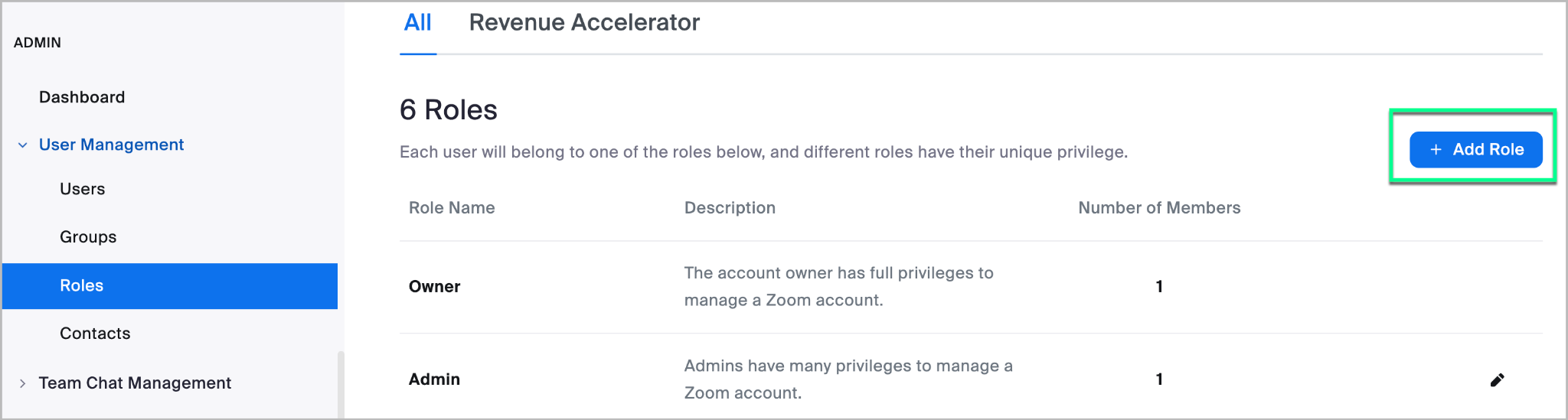
2. In the left-side menu, extend **User Administration** and click **Roles**. On the following screen, click **+Add Role** and name it *Delegate Administration*, or something else of your choosing, and click **Add**.
How to add a new custom Role
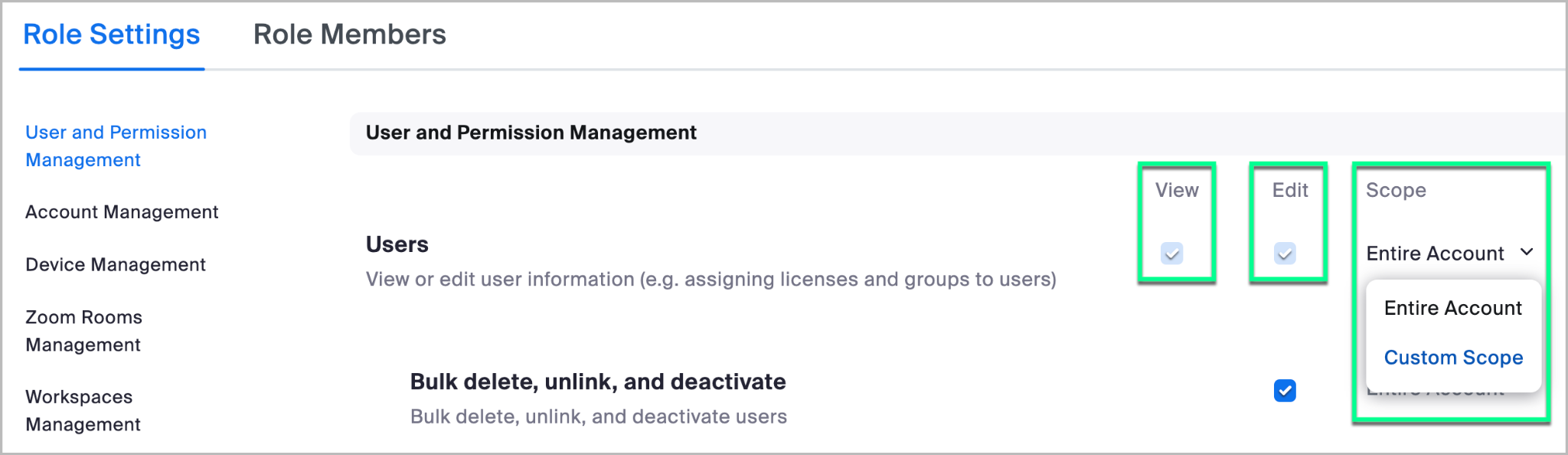
3. On the following screen, select the **View** and **Edit** permissions for each setting you want to grant to the role, in addition to the **Scope** of access for the account. *Entire Account access is typically recommended as you get started*.
Confirming role permissions and scopes
As you get started, we suggest granting at *least* view access to *most* settings, as determined by your comfort. Depending on your preferences, you might choose to exclude view settings for information related to billing, chat history, and other sensitive information. However, some of the most commonly required permissions for troubleshooting include:
| **User and Permission Management** |
| --------------------------------------------------------------------------------------------------------------------------------------------------------------------------------------------------------------------------------------------------------------- |
|
Users
User Advanced Settings
Role Management
Role Management - Phone
Groups
|
| **Account Management** |
|
Account Profile
Account Settings
Webinar Settings
|
| **Zoom Rooms Management** |
|
Zoom Rooms
Digital Signage Content Admin
Calendar Integration
H.323/SIP Room Connector
|
| **Dashboard** |
|
Dashboard Home Page
Meetings
Zoom Rooms
CRC
Webinars
Chat
Zoom Phone
|
| **Reports** |
|
Usage Reports
Phone System
User Activity Reports
Admin Activity Logs
Sign In/Sign Out
|
| **Advanced Features** |
|
Zoom for Developers
OAuth
Chatbot
Meeting SDK
Webhook
Server-to-Server OAuth App
Zoom Mesh
Branding
Security
Single Sign-On
Marketplace
SMS Campaigns
|
| **Zoom Phone** |
|
Phone management
|
4. Once complete, click **Save Changes** at the bottom of your screen.
### Step 2: Add Your Delegate(s)
Now that the role is created, invite your intended delegates (i.e., necessary members of your sales or account team) to join your account. To add a delegate, perform the following steps:
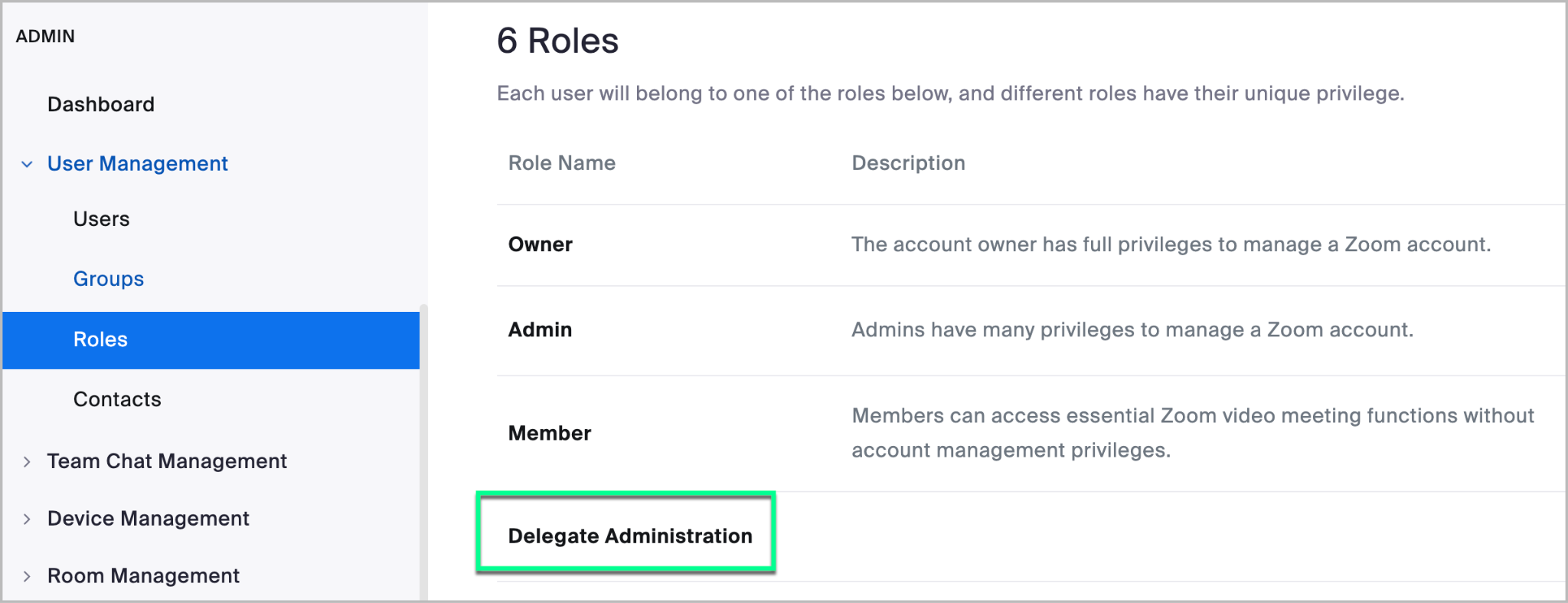
1. In the left-side menu, extend **User Administration** and click **Roles**. On the following screen, click **Delegate Administration**, or the name previously chosen if different.
Example of a custom Delegate Administration role
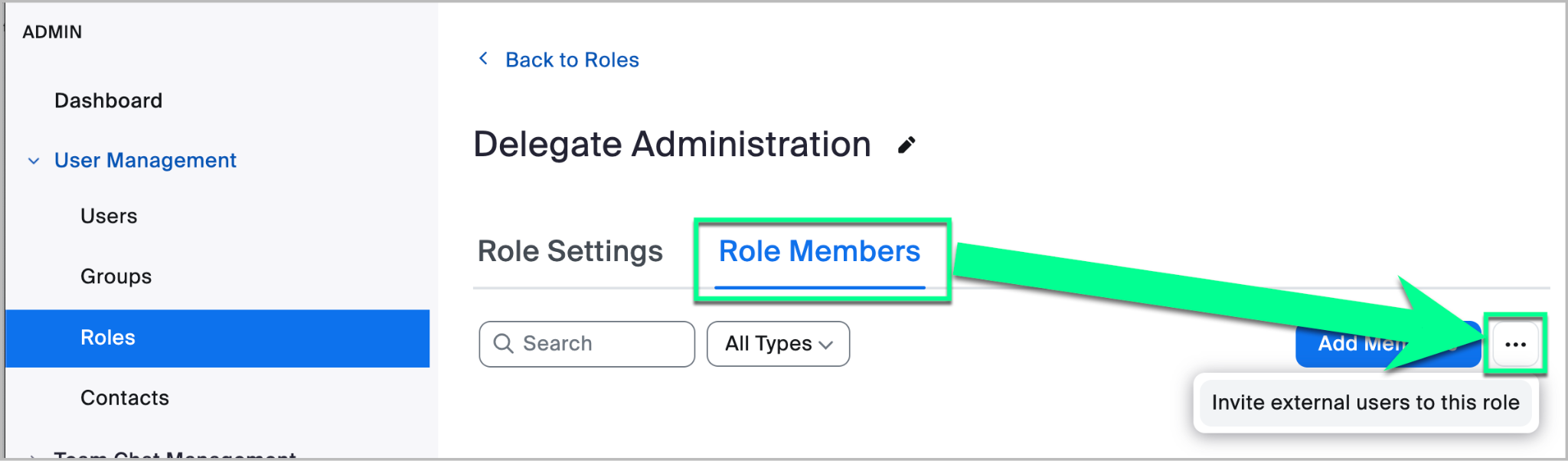
2. On the following screen, click the **Role Members** tab. Then click the ellipses (**...**), and click **Invite external users to this role**.
How to invite external users to the custom role
3. An agreement pop-up will appear. If you agree with the statement, click **Accept**.
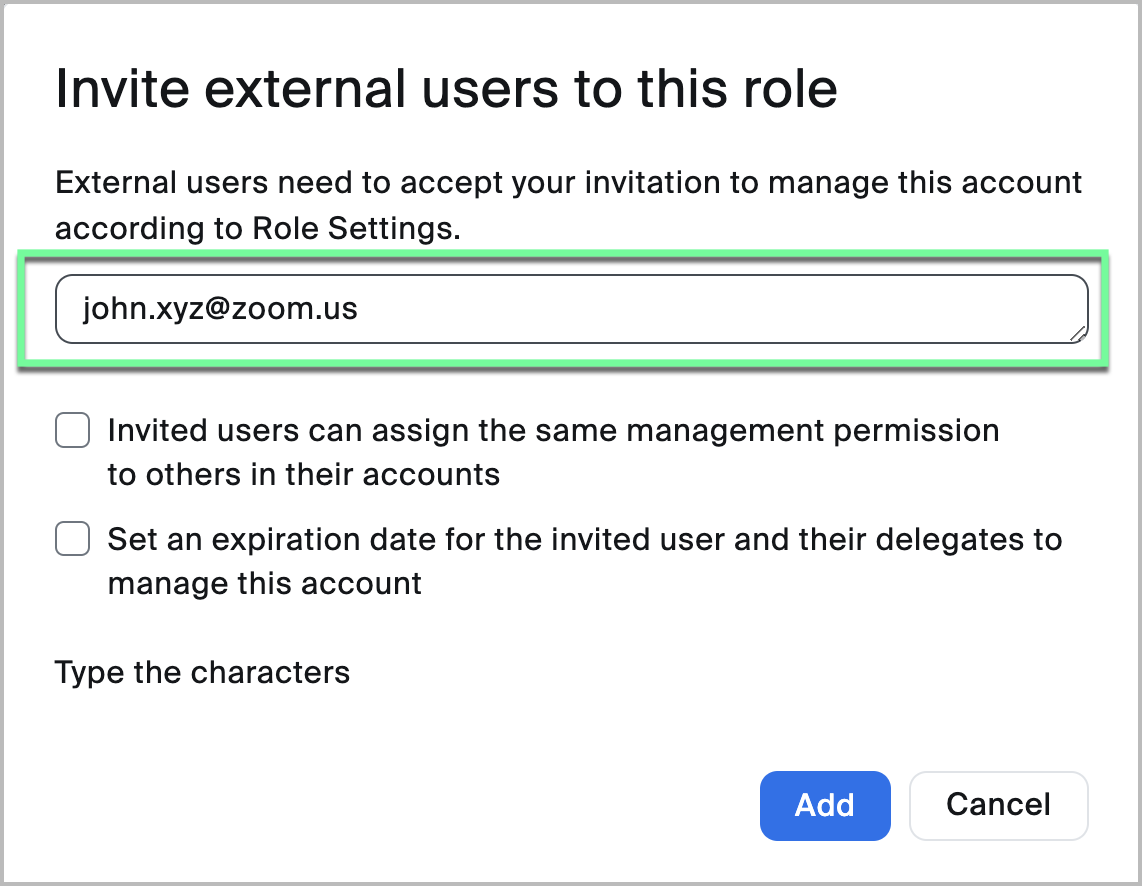
4. In the following pop-up, input the email address of your intended delegate and select the appropriate options.
1. If you select the option for *Invited users can assign the same management position to others in their accounts*, then the delegate user can invite other members of their primary account to assume the same role-based access to *your* account.
2. For example, if John Xyz from Zoom is granted delegate access with this permission enabled, John can also grant the same permission to another Zoom colleague at any time. If so, you **will not** be notified of this action and those sub-delegated users will not display on the delegate list.
3. If you select the option to *Set an expiration date for the invited user and their delegates to manage this account*, the user’s access, and any of their underlying delegates from the previous setting, will lose access at the determined time.
Once your settings are set, click **Add**.
### Step 3: Reviewing the Delegate List
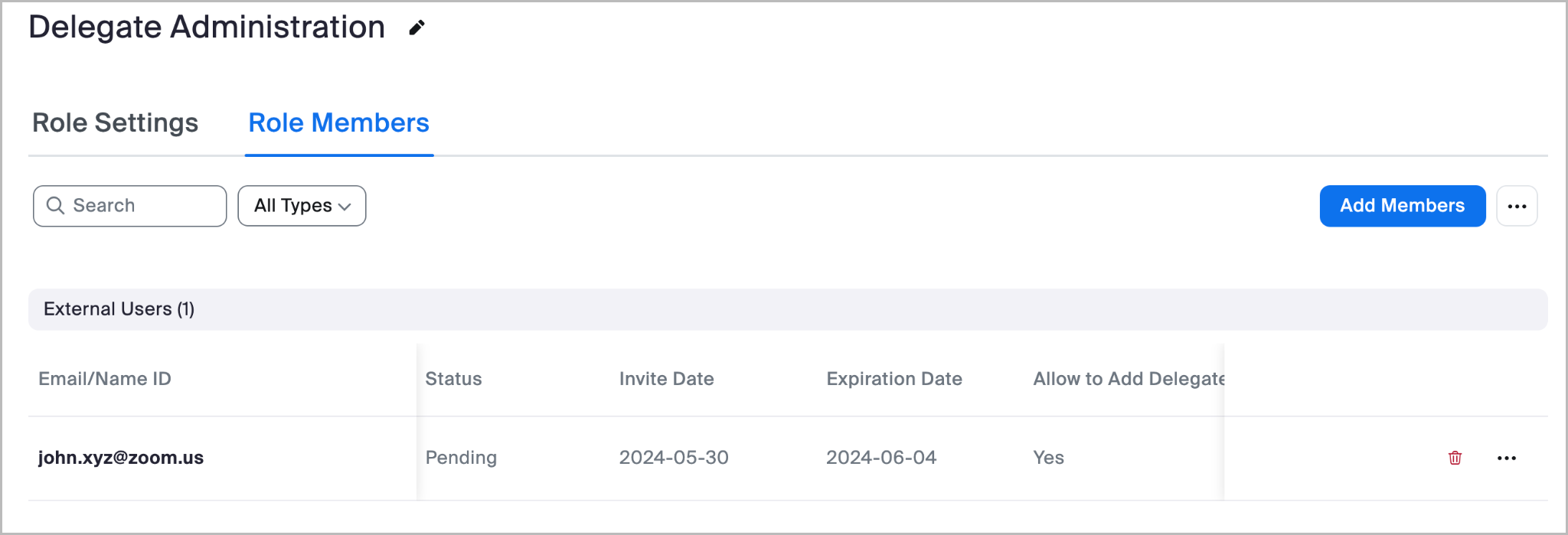
After inviting a user to be a delegate, the **Role Members** tab will display the list of delegates, including their acceptance status, expiration date, and if they have the ability to assign other delegates from their account. You can remove access from delegates at any time from this screen.
### Step 4: Accepting the Invite (Delegate Action Required)
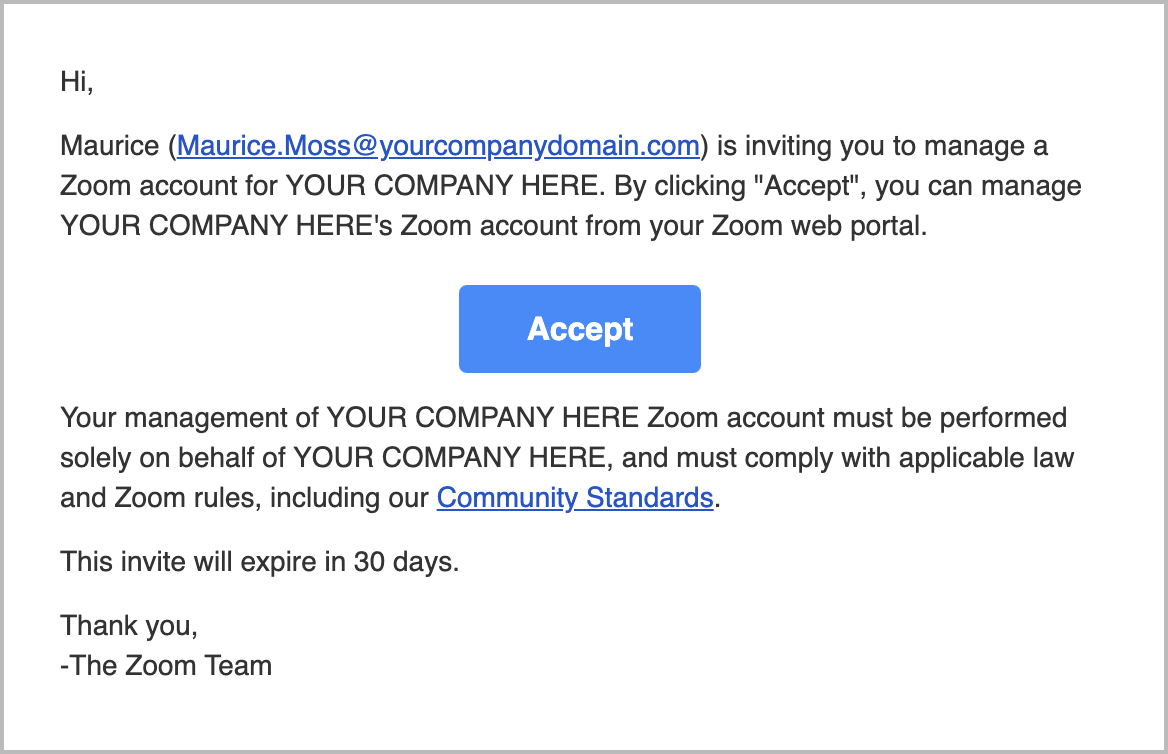
After the invitation is sent, the user will receive an email to be a delegate within your account. There is no action required here on behalf of the inviting company and is provided for visibility purposes.
### Step 5: Delegate Account Access
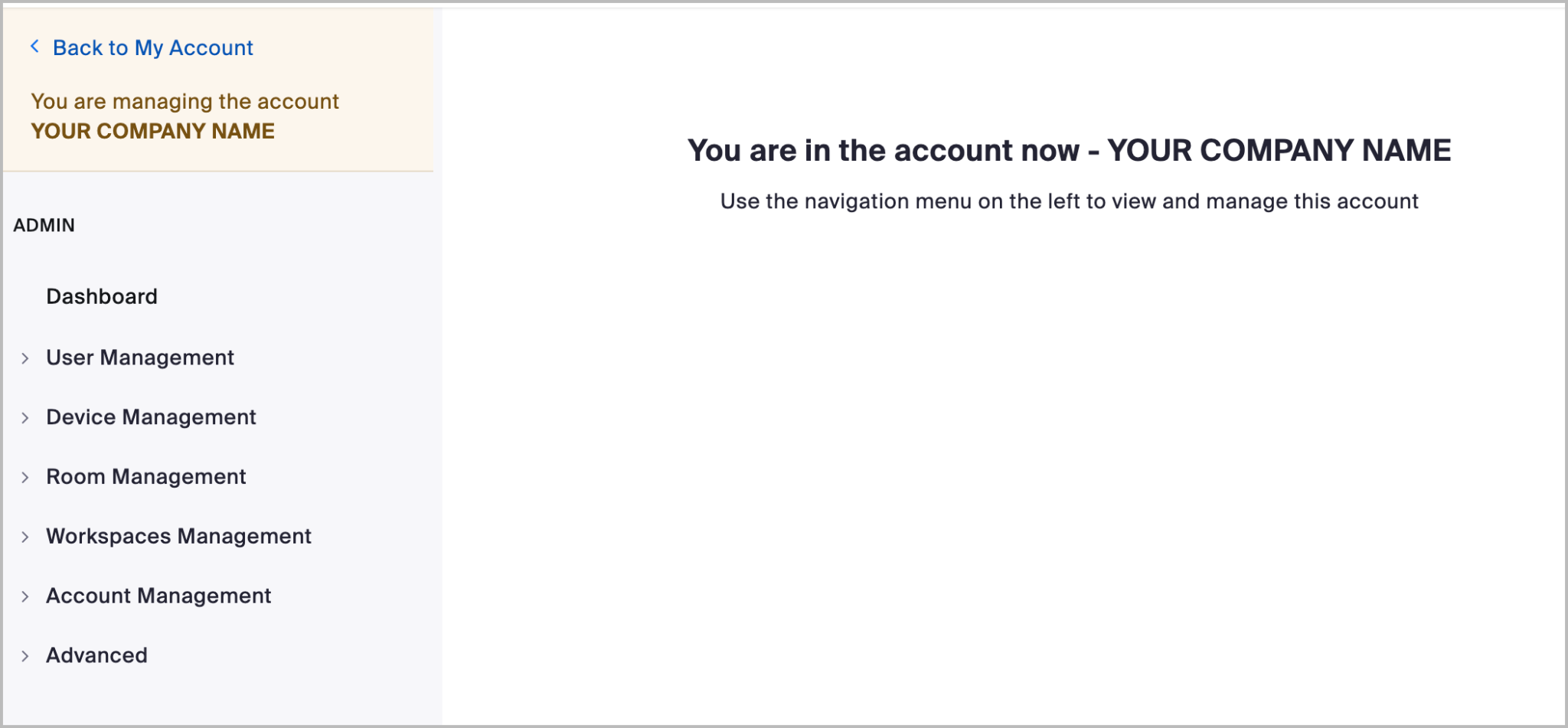
After the delegate has accepted the invitation to the account, they can authenticate into *your* account through their personal web portal. From there, they will only be able to see information and settings you have granted expressed permission to, as done in Step 1.
{% hint style="warning" %}
**Heads Up**
If the delegated admin has been granted the appropriate permissions, they can also perform tasks in additional areas of the Zoom platform outside of the Zoom web portal, such as [Zoom Events](https://events.zoom.us/) and the [Zoom Marketplace](https://marketplace.zoom.us/).
{% endhint %}
---
# Agent Instructions
This documentation is published with GitBook. GitBook is the documentation platform designed so that both humans and AI agents can read, navigate, and reason over technical content effectively. Learn more at gitbook.com.
## Querying This Documentation
If you need additional information that is not directly available in this page, you can query the documentation dynamically by asking a question.
Perform an HTTP GET request on the current page URL with the `ask` query parameter, and the optional `goal` query parameter:
```
GET https://library.zoom.com/admin-corner/account-and-endpoint-management/delegated-administration-field-guide.md?ask=&goal=
```
`ask` is the immediate question: it should be specific, self-contained, and written in natural language.
`goal` is optional and describes the broader end goal you are ultimately trying to accomplish on behalf of the user. GitBook uses it to tailor the answer towards what is most useful for that goal.
The response will contain a direct answer to the question and relevant excerpts and sources from the documentation.
Use this mechanism when the answer is not explicitly present in the current page, you need clarification or additional context, or you want to retrieve related documentation sections.