> For the complete documentation index, see [llms.txt](https://library.zoom.com/llms.txt). Markdown versions of documentation pages are available by appending `.md` to page URLs; this page is available as [Markdown](https://library.zoom.com/zoom-workplace/zoom-meetings/securing-zoom-meetings-explainer/manage-automated-tools-and-participants-in-your-zoom-meetings.md).
# Manage Automated Tools and Participants in your Zoom Meetings
The following security features allow meeting hosts to view and manage the participants that have joined or are attempting to join a meeting. These participants may be joining as automated meeting tools or dial-in users, or via third-party room devices, Zoom Rooms, or the Zoom client. Unlike apps using Zoom Realtime Media Streams, third-party automated meeting tools that join as participants will also be visible in the following security features.
### Enable Waiting Room
[Waiting Room](https://support.zoom.us/hc/en-us/articles/115000332726-Using-Waiting-Room) is a virtual staging area that stops participants from joining a meeting until you, the meeting host, are ready to start the meeting. Waiting Room is an effective way to screen who is trying to enter your meeting and keep uninvited automated meeting tools, dial-in users, or third-party room systems out. Uninvited participants can be identified in the Waiting Room and removed before they join the meeting.
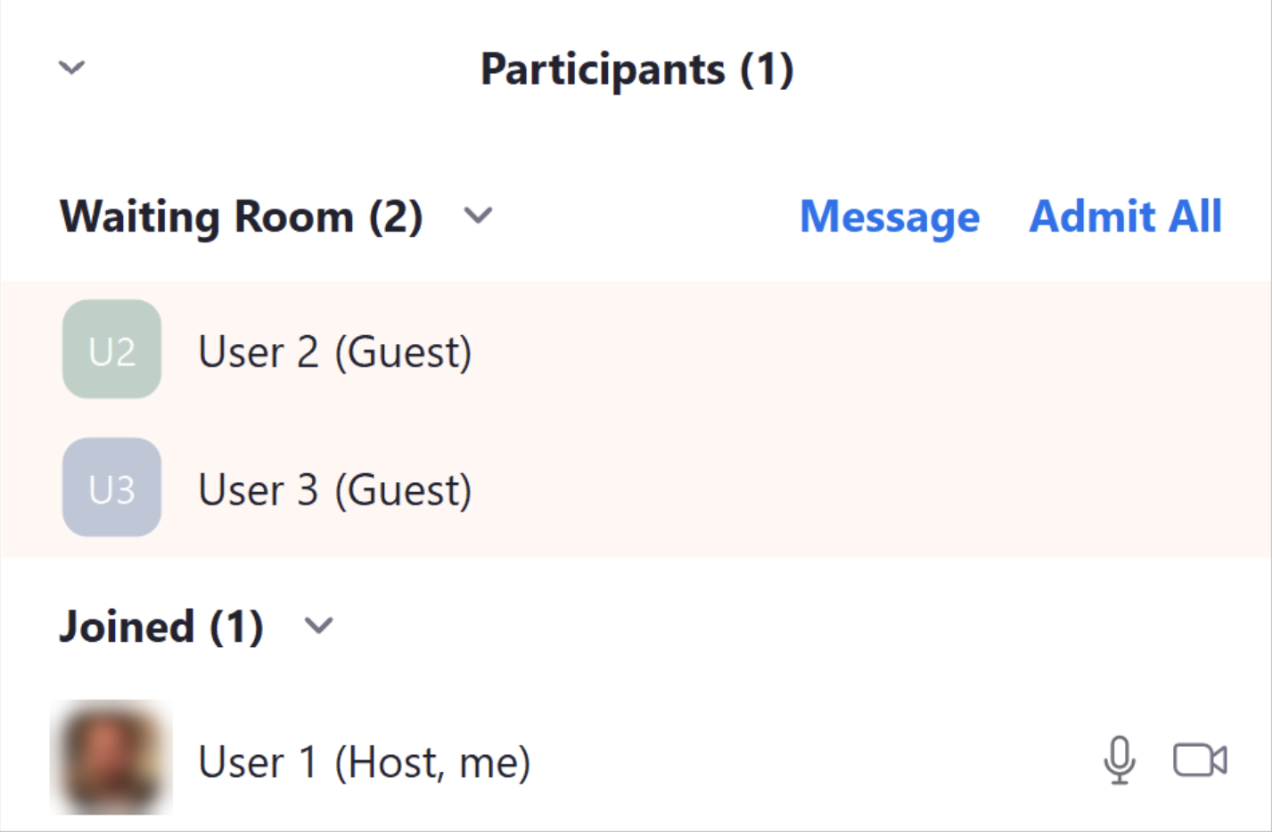
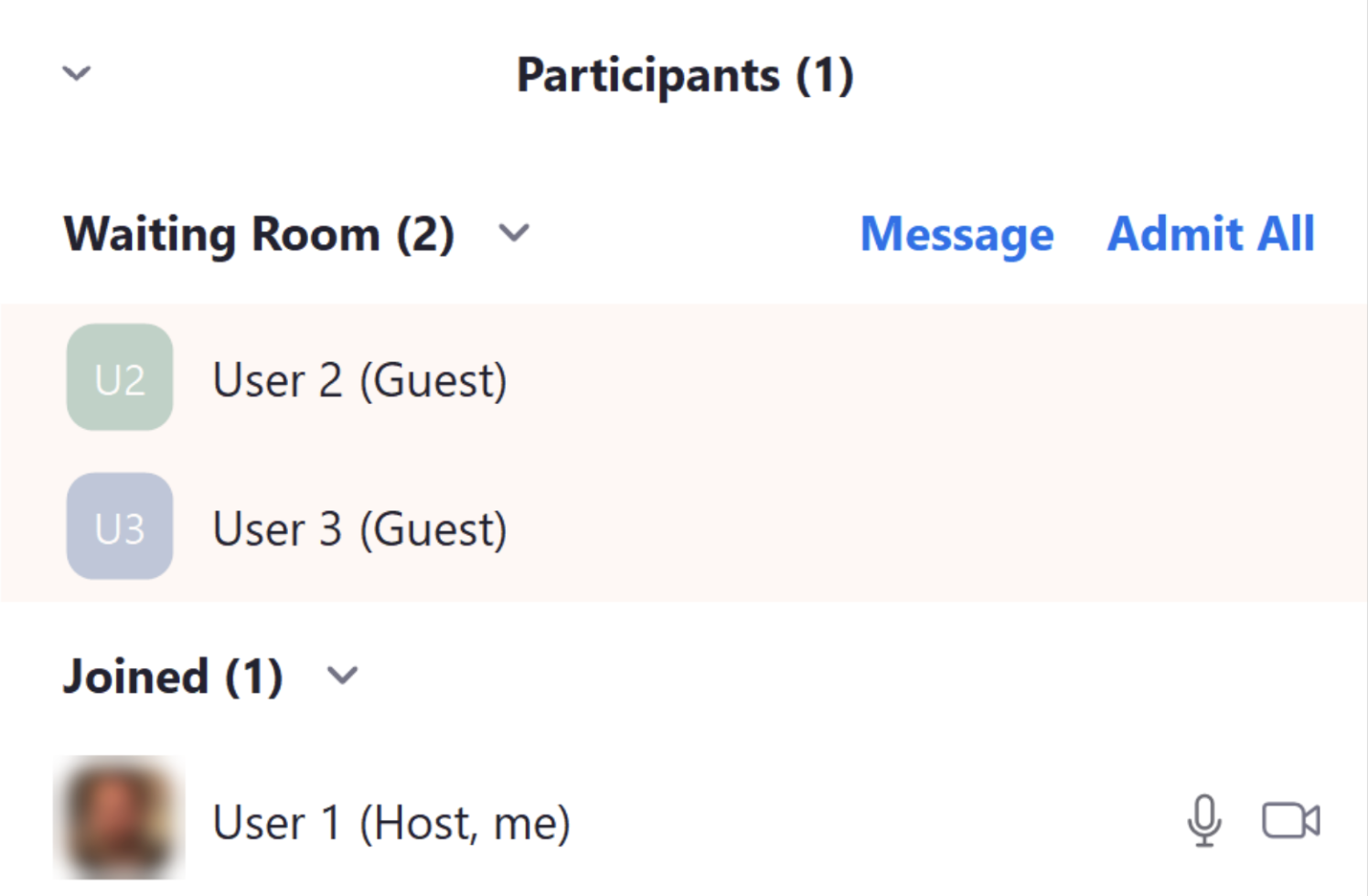
The Waiting Room can be viewed by clicking the **Participants** icon while in a Zoom Meeting. This list will show which participants are in the Waiting Room and which participants have been admitted to the meeting. The host or co-host(s) can admit users one by one or click **Admit All** to allow all users in the Waiting Room into the meeting. If the host identifies an uninvited participant in the Waiting Room, they can remove and block them from trying to re-enter the Waiting Room.
While in a meeting with Waiting Room enabled, hosts will receive an on-screen notification banner when new participants have entered the Waiting Room.
{% hint style="info" %}
If Waiting Room is enabled in your meeting settings, the **Join before host** setting will only work for participants that you have configured to bypass the Waiting Room.
{% endhint %}
#### Allow certain users to bypass the Waiting Room
You can configure your [Waiting Room Options](https://support.zoom.us/hc/en-us/articles/4905283822733-Enabling-and-customizing-the-Waiting-Room#h_01ENK1GCMS567D2PKVQJZV41RZ) in the Zoom web portal to allow users from your account to bypass the Waiting Room. Entire domains can also be specified, which allows participants from these specified domains to bypass the Waiting Room, as well. By allowing users from trusted accounts and domains directly into the meeting, the host will have a smaller number of participants in the Waiting Room to review and admit.
#### Allow approved third-party room devices to bypass the Waiting Room
Approved third-party room devices (SIP/H.323-based video conferencing systems) can also be pre-approved to bypass the Waiting Room. This setting is found in the **Waiting Room Options** section of the web portal. The list of [approved third-party room devices](https://support.zoom.us/hc/en-us/articles/115001488303) within your account will bypass the Waiting Room when the **Approved SIP/H.323 Devices** checkbox is selected in the Waiting Room Options section.
The following pre-approval options allow third-party room devices to bypass the Waiting Room:
* **SIP/H.323 Rooms managed by Zoom Connector**\
Managed devices will be pre-approved to bypass the Waiting Room.
* **SIP/H.323 devices by IP address**\
Devices using the specified IP addresses, or addresses within the specified range, will be pre-approved when joining the Waiting Room.
* **SIP/H.323 devices with specific public certificates**\
This allows the uploading of a certificate that will be used to verify if a device has been pre-approved.
#### Customize the look and message of the Waiting Room
Users on paid Zoom plans can log in to the Zoom web portal and [customize](https://support.zoom.us/hc/en-us/articles/4905283822733-Enabling-and-customizing-the-Waiting-Room) the message and title of their Waiting Room. This area is a great spot to post rules, guidelines, or an agenda for your meeting. You can also add a logo, image, or video (within size limitations). These customizations help participants know that they are in the right meeting and what to expect for the session once they are admitted.
#### Enable Waiting Room at any time
Waiting Room can be enabled proactively for an entire account or group by an administrator or account owner. Meeting hosts can choose to enable Waiting Room while scheduling individual meetings or enable it proactively within their personal settings in the Zoom web portal. Waiting Room can also be enabled during a live meeting to allow hosts to remove disruptive participants, which could include uninvited automated meeting tools, from the meeting.
### Identify guests in Meetings and Webinars
The [Identifying guests in the meeting/webinar](https://support.zoom.us/hc/en-us/articles/115004791123-Identifying-guests-in-the-meeting-webinar#h_01F60BEXNW4YDT0BHFENKWD342) setting allows you and participants who are users on your account to see that a guest is participating in a meeting or webinar. A guest is identified as someone who either is not signed in to a Zoom account or is signed in with an email address that is not on the same account as the host. With this setting enabled, uninvited automated meeting tools, dial-in users, or third-party room devices will be listed as guests.
Meeting guests will be identified with descriptive text in both the Waiting Room (if enabled) and the Participants list for the active meeting.
The **Identifying guests in the meeting/webinar** setting can be enabled by administrators at an account and group level, and also in individual user settings.
### Use the in-meeting Active Apps Notifier to see when an automated meeting tool is active
[Active Apps Notifier](https://support.zoom.us/hc/en-us/articles/360060577291) is an in-meeting notification that informs users when a host or other participant is using an automated meeting tool that is accessing meeting or webinar content, such as real-time video, audio, screen or whiteboard sharing, chat, or files shared in the meeting. These notifications are designed to empower users to know that participants are sharing content with third-party apps and make informed decisions about if and how they participate in a Zoom session.
#### Use the Active Apps Notifier
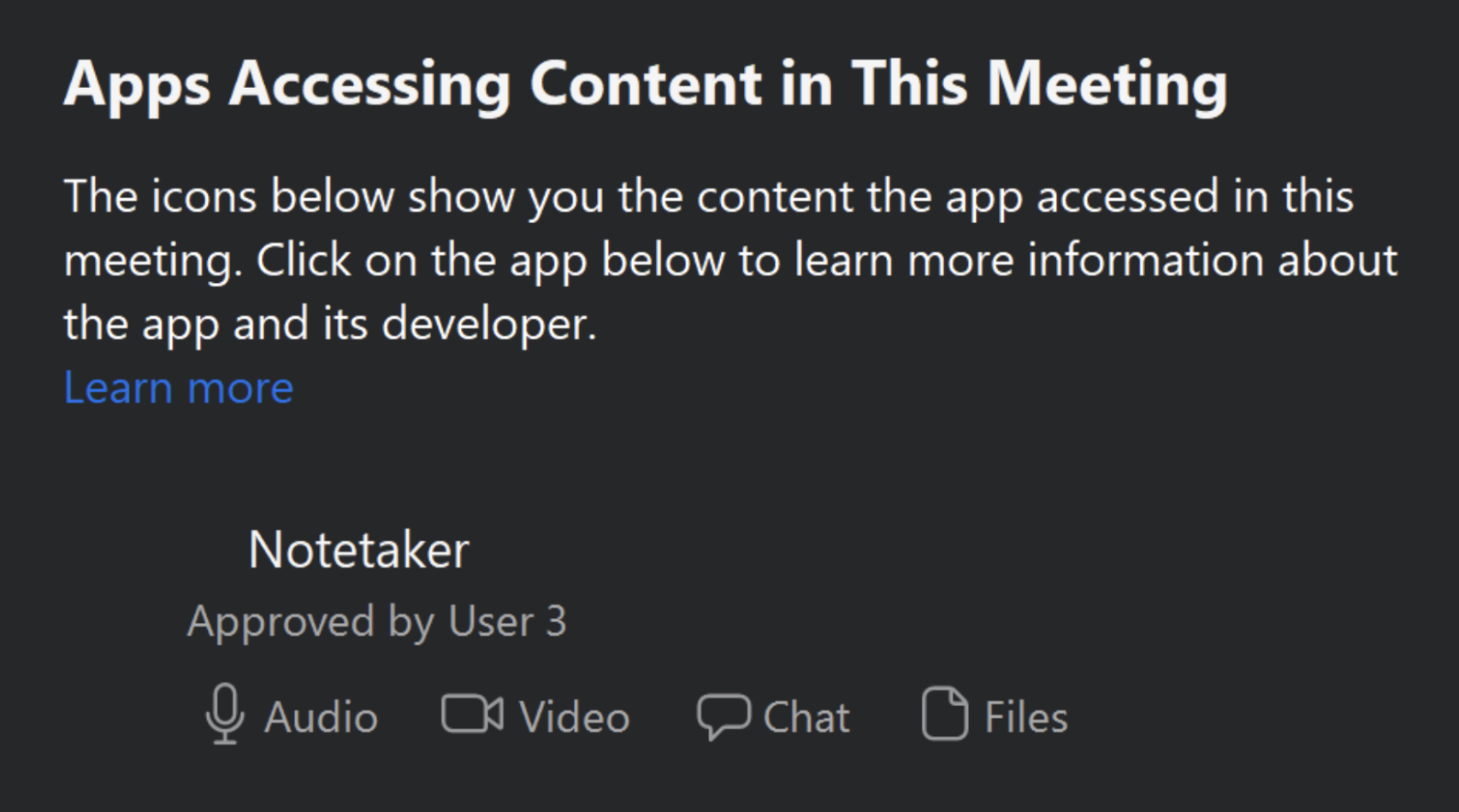
The Active Apps Notifier icon will appear in the top-right corner of the meeting window when an automated meeting tool begins accessing meeting or webinar content. A user can click the icon to show a list of automated meeting tools that are accessing content during that session, along with what type of content they have access to and which users are using them.
The meeting host may allow the automated meeting tool to stay in the meeting, or the host may remove and/or report it if the automated meeting tool is uninvited.
---
# Agent Instructions
This documentation is published with GitBook. GitBook is the documentation platform designed so that both humans and AI agents can read, navigate, and reason over technical content effectively. Learn more at gitbook.com.
## Querying This Documentation
If you need additional information that is not directly available in this page, you can query the documentation dynamically by asking a question.
Perform an HTTP GET request on the following URL with the `ask` and `goal` query parameters:
```
GET https://library.zoom.com/zoom-workplace/zoom-meetings/securing-zoom-meetings-explainer/manage-automated-tools-and-participants-in-your-zoom-meetings.md?ask=&goal=
```
`ask` is the immediate question: it should be specific, self-contained, and written in natural language.
`goal` is what the user is ultimately trying to achieve, the reason they need the answer. Sharing it helps GitBook give you a better, more relevant answer. A goal is most helpful when it describes the outcome the user wants rather than restating the question. For example, with `ask=how do I create an API token`, a goal like `build a script that syncs our docs to a CMS` lets GitBook tailor the answer to that use case.
The response will contain a direct answer to the question and relevant excerpts and sources from the documentation.
Use this mechanism when the answer is not explicitly present in the current page, you need clarification or additional context, or you want to retrieve related documentation sections.